
There are people who fall into their career. And there are people who build it — one intentional relationship at a time.
John Zanzarella is the second kind.
In Episode 47 of The Padernacht Podcast: Brick by Brick, John — Chief Revenue Officer at Performline, a financial services compliance software company — walked us through a career that started with his dad answering the phone at a media buying business in Westchester, moved through caddying at a private golf club, took a detour through a law firm, pivoted hard into entrepreneurship, survived a company acquisition by private equity, and landed at the C-suite. Not by luck. By showing up in the right rooms and treating every conversation like it matters.
I’m Steven Padernacht with The Padernacht Real Estate Team at Keller Williams Realty NYC Group. This is Brick by Brick.
Who Is John Zanzarella?
John grew up in Westchester in a household built around business. His father ran a media buying and planning company for over thirty years, and from the age of ten, John was answering the phones. One line. No call waiting. Take a message and move on. That early exposure to how a business actually runs — not in a classroom, but in real life — shaped everything that came after.
He went to Fairfield University as a marketing major with an information systems minor. He wasn’t the top student in the room. He knew it. But he knew how to connect with people, how to work a room, and how to make the most of wherever he was. Those skills, it turned out, would take him further than any GPA.
The Golf Course That Changed Everything
In high school and college, John caddied at a private golf club in Westchester. He describes it as one of the best jobs he ever had — not for the money, but for the exposure.
“You’re rubbing elbows with really successful people,” he told me. “The parking lot was full of nice cars. The people were the nicest. I got a taste for the country club life.”
That early proximity to success at a young age — seeing what the next level looked like — planted something. And it would come back around in a way he didn’t expect.
After graduating in 2008 — right as the economy was collapsing, watching his finance major friends at Lehman Brothers lose their jobs within months of starting — John landed at a law firm. Not as an attorney. In marketing. And it was there that he met Chris Dessi.
Chris had left a successful sales career to start his own digital marketing agency. He walked into the law firm full of enthusiasm and ideas — content strategy, social media, the whole thing — in an era when most companies didn’t even have a LinkedIn account. John gravitated toward that energy immediately.
The turning point came at a golf event at Pinehurst, North Carolina — home of the US Open. John’s company needed someone to run the event. Most of his colleagues weren’t interested. He raised his hand. Chris was there. And watching John run that event — with the instincts he’d absorbed from his father’s years of producing media events — Chris made him an offer. Come work with me. Build this thing together.
“That was the beginning of six months of us building that band together,” John said.
Taking the Leap at 27
Leaving a stable law firm job to co-found a digital marketing agency in 2010 was not the obvious move. There was no health insurance plan on the other side. No guaranteed salary. No safety net.
“I was twenty-seven. Now’s the time to do it,” John told me. “I wanted to be excited about what I was doing every day.”
That clarity — knowing what he didn’t want more than knowing exactly what he did want — made the decision easier. Not easy. Easier. They built the agency, held events, brought in speakers from Pepsi and Mastercard, even landed Gary Vaynerchuk for an event at a county center when Gary was still early in his rise. The whole operation was an education in how to create value before asking for anything in return.
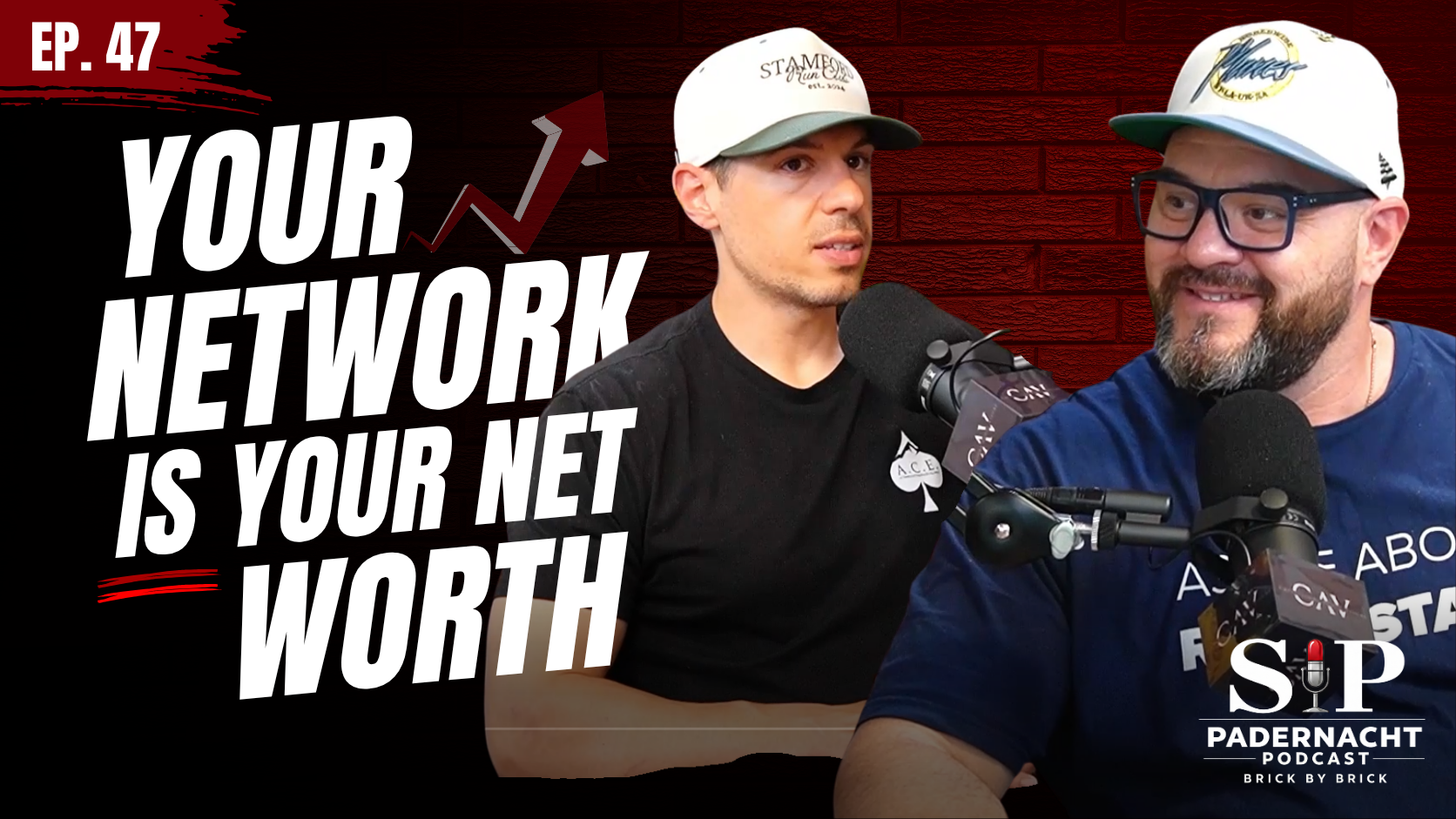
Your Network Is Your Net Worth
One of the central themes of this conversation was the power of relationships — specifically the difference between random meetings and intentional ones.
John described a moment after a breakup, running into someone from grammar school who said something that landed completely differently than expected. A moment that shifted his perspective entirely and opened up the path toward the business relationship with Chris.
“I’ve realized that your network is your net worth,” John said. “And there’s a real correlation there.”
But he was careful to distinguish passive networking from intentional positioning. As he’s gotten older — now 44, with three kids — every minute outside of his family has to count. So he puts himself in rooms deliberately. The gym in Stamford. ACE dinners. Industry events. Not to collect business cards. To build relationships that compound over time.
It’s how he and I met, actually. Through a gym connection in Stamford, through mutual people who were already doing the right things.
The Letters His Father Wrote Him
This was the part of the conversation that hit hardest.
Before John’s first day at the law firm, his father wrote him a letter. It covered the things that never get taught in school — treat everybody the same, don’t bring up certain subjects, pick up something off the floor and throw it away. The fundamentals of showing up as a professional.
Before John started working with Chris in a sales role, his father wrote him another letter. This one was about why everybody — regardless of their title — is in sales. Why learning to sell is the one skill that protects you from everything.
And then, in the last six months of his father’s life, when his father lost his voice completely, he kept writing. Notes, letters, whatever he could put on paper. John has a folder filled with all of it.
“Going back to that is the equivalent of those letters you have in your office,” he told me. “Seeing the actual handwriting on the paper. There’s something to that.”
His father’s single most practical piece of advice: Read books. You’ll be able to relate to more people. If you can find something to connect on with anyone — even a senior attorney who’s never watched a sporting event in his life — you buy yourself enough time to get back in the game.
AI Is Not Coming for Your Job — If You Can Sell
John runs a software company in an industry being reshaped by AI in real time. He’s watching competitors get disrupted. He’s watching valuations fall. He’s also watching what the companies that are winning are doing differently.
His take was direct: AI is not coming for your job. Not if you can sell.
“It’s coming for people’s jobs. But it’s not coming for your job if you can sell. You don’t need to be in a sales job. But if you can sell, you’re going to find a way to make it through.”
The companies that are struggling are the ones where people are running away from AI instead of running toward it. The ones thriving are using it to become more efficient — better pitches, faster emails, sharper decks — not to replace human judgment, but to amplify it.
He uses Claude for work. He uses Gemini because his workflow runs on Google. He described NotebookLM — a Google product where you upload sources and it creates podcasts, quizzes, and presentations from your content — as something that’s “absolutely amazing and it’s free.” His take on the big picture: this is the internet wave all over again, except moving faster and with higher stakes. The people who adapt ride it. The people who wait get left behind.
The ICP Lesson — Fortune 100 Banks and the Bronx Are More Alike Than You Think
One of my favorite moments in this conversation was when John described his Ideal Customer Profile — Fortune 100 financial services companies with ten to fifty billion dollars in assets under management. JPMorgan. Bank of America. Citi.
I stopped him and said: that’s the same thing I do.
My ICP is first-time home buyers in the Bronx with $200K household income, 10–15% down, credit above 700. Different market. Different deal size. Completely different buyer. But the concept — knowing exactly who you’re building your business around, what their problems are, and how your solution fits — is identical.
“Business is still about lead generation,” John said. “And making sure that if you don’t have clients coming into the pipeline, you’ll be out of business.”
Whether you’re in enterprise software or Bronx real estate, the fundamentals don’t change.
Intrapreneurship — The Mindset That Gets You Promoted
When John’s agency was acquired by Performline, he didn’t arrive with a guaranteed path. He arrived as a Director of Sales and Marketing Operations, spent six months fixing broken processes, then moved into individual contributor sales, then VP of Sales, then CRO after a private equity acquisition. Five or six promotions in eight years.
How? He called it intrapreneurship — acting like a business owner inside a company.
“I’ve always treated it as if I owned the business,” he said. “That entrepreneurial mentality is the same thing even if you’re at a company. If you think that way and act that way, you will likely grow.”
Private equity companies, he explained, are running an audition. Every day. They’re looking at who could run another company in their portfolio. Who could be connected to something else they’re building. The people who get complacent get replaced. The people who act like they own the business get called up.
The average tenure for a software executive is eighteen months. John is an outlier. And the reason, he said, is simply that he never stopped operating like the outcome was on him.
Financial Literacy — How He Built His Money Team
John has read Rich Dad Poor Dad. He works with a fee-only financial planner who doesn’t sell products — they’re paid a flat fee, not a commission. He has a tax strategist he found through a referral who operates out of St. Louis and specializes in helping entrepreneurs maximize the tax code. He found his life insurance advisor through LinkedIn — spent two years asking questions before ever buying a product.
His advice to anyone starting to build their financial team: don’t be afraid to ask questions for longer than feels comfortable. And look for word of mouth over advertising. Every person on his team came through a referral from someone he already trusted.
“Personal finance is very personal,” he said. “What your goals are is going to be different from mine. So go online and there’s so much general information out there. All of it is right depending on what your goals are.”
Legacy — John Henry III
At the end of every episode, I ask the same question. Long after you’re gone, what do you want your legacy to be?
John didn’t pause long.
His son is named John Henry. His father was John Anthony. He is John Thomas. Three generations of Johns.
“My kids are my best legacy right now,” he said. “Not the company I work for. Not the revenue I drove. My kids.”
He wants them to grow up knowing they’re loved, that they can always come home, that their parents model what a healthy relationship looks like. He and his wife made it a goal early on that she could stay home with the kids. He stopped drinking — not because of any issue, but because it made him a better parent, sharper, more present.
He described the hardest transition of every day: going from a board meeting or a negotiation with a major bank straight to being a dad the moment the clock hits five. His kids don’t know he was in work mode sixty seconds ago. And learning to make that switch — to be fully present and fully patient — is something he’s still working on.
“Perfectly imperfect,” he said. “That’s all you can be.”
Watch or Listen to the Full Episode
Listen on:
Connect With John Zanzarella
Ready to Buy or Sell in the Bronx?
If this conversation resonated with you, share it with someone who needs to hear it.
And if you’re thinking about buying, selling, or investing in the Bronx — I’m always available for a free conversation.